
What are the different types of dental implants available?
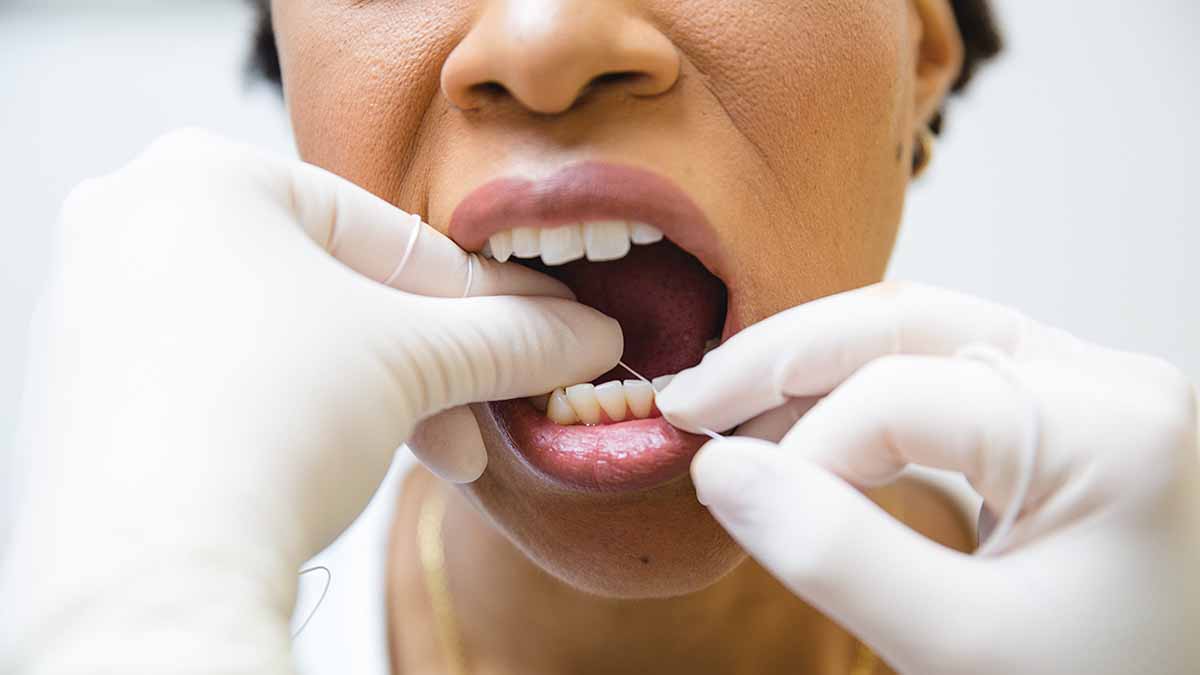
Close-up of a dental professional wearing white latex gloves using dental floss between a patient's lower teeth, with the patient's mouth open wide.

At Meza Dental, we value you and your time. We aim to provide the best possible care with minimal disruption to your daily life. Dental implants are artificial roots that support and retain prosthetic teeth - the most consistent and durable way to replace missing teeth. Dental implants come in different sizes, heights, and types.

One of our AACD-accredited implant dentists can help you determine the best option for your needs. Today, we'd like to expand on the most common types of dental implants:

All on 2 Dental Implants (Removable Denture)

This type of implant can replace a full set of teeth or an entire arch (top and bottom), meaning it replaces 14 teeth in each arch. The patient will need at least two dental implants to support two dentures. This option can be used to avoid the need for a full or removable denture, but it is generally not the most comfortable. At Meza Dental Care, we recommend all-on-four or all-on-six dental implant procedures.

All on 4 Dental Implants

The All-on-4 dental implant concept involves placing four implants supporting a non-removable denture (bridge). These four dental implants act like pillars to the denture, supporting the prosthetic teeth. This denture, called a hybrid denture, is formed by a metal frame to which acrylic teeth are added - each tooth individually inserted on the metal frame, with simulated gums added. This requires a certain level of artistry in addition to technical expertise, so your smile will look like it is part of your natural bone structure.

All on 6 Dental Implants

The difference between the All-on-4 and All-on-6 implants is simply the number of implants used. The decision on which method to use depends on the clinical opinion of the dental practice. At Meza Dental, we recommend the All-on-6 procedure because, in our experience, it provides better strength and stability, especially when you chew or bite. Six dental implants allow for even distribution of bite pressure across the jaw, resulting in significant added strength, stability, and long-lasting benefits.

Esthetically, the All-on-6 dental implant looks more natural than other types, as we use porcelain to make the teeth look even more similar to your natural teeth. The structure for each tooth is custom molded directly onto the metal frame for a more natural look and longer-lasting results - the closest thing to having natural teeth.

Fixed Bridges

A dental bridge is a fixed (non-removable) appliance and is an excellent way to replace missing teeth. The "traditional bridge" is the most popular type and is usually made of porcelain fused to metal. This type of bridge consists of two crowns that go over two anchoring teeth (abutment teeth) and are attached to pontics (artificial teeth), filling the gap created by one or more missing teeth. Dental bridges are highly durable and will last many years; however, due to normal wear over time, they may need replacement or re-cementing.

The best patient is an educated patient. We aim to help you make informed decisions about your oral health. Please consult with one of our implant dentists today to discuss the proper dental implant treatment for you. We look forward to seeing you soon and helping you achieve a lifetime of healthy, beautiful smiles.

Related Content

Titanium dental implant standing beside a white ceramic crown on warm amber paper.

Dental Implants

What Osseointegration Actually Means — And Why It Changes Everything

Osseointegration is how a dental implant fuses with your jawbone, stopping the bone loss that follows tooth loss. Here's how the process works.

Read the Article »

Titanium dental implant standing beside a white ceramic crown on warm amber paper.

What Osseointegration Actually Means — And Why It Changes Everything

Osseointegration is how a dental implant fuses with your jawbone, stopping the bone loss that follows tooth loss. Here's how the process works.

Read the Article »

Hourglass lying on cream paper with the sand about half run through.

Dental Implants

How Long Can You Wait to Replace a Missing Tooth? What Bone Loss Timelines Mean for Your Options

Bone loss after tooth extraction peaks in the first 3–6 months. Waiting beyond 12 months often requires bone grafting before implant placement — adding 4–6 months and extra cost. Here's what the research shows.

Read the Article »

Hourglass lying on cream paper with the sand about half run through.

How Long Can You Wait to Replace a Missing Tooth? What Bone Loss Timelines Mean for Your Options

Bone loss after tooth extraction peaks in the first 3–6 months. Waiting beyond 12 months often requires bone grafting before implant placement — adding 4–6 months and extra cost. Here's what the research shows.

Read the Article »

Round hand mirror with a brass handle lying on warm amber paper, reflecting soft window light.

Dental Implants

How Missing Teeth Change Your Face Shape — And Why Most Patients Don't Connect the Two

Missing teeth cause jaw bone loss that reshapes the face — sunken cheeks, thinner lips, shortened lower face. Here's what the research documents and why the changes are often mistaken for aging.

Read the Article »

Round hand mirror with a brass handle lying on warm amber paper, reflecting soft window light.

How Missing Teeth Change Your Face Shape — And Why Most Patients Don't Connect the Two

Missing teeth cause jaw bone loss that reshapes the face — sunken cheeks, thinner lips, shortened lower face. Here's what the research documents and why the changes are often mistaken for aging.

Read the Article »

Dental Implants

What Happens to Your Jaw Bone After a Tooth Extraction — And Why It Starts Sooner Than You Think

Jaw bone loss after tooth extraction begins within days — not months. Clinical studies show 30% of first-year bone loss occurs in the first 12 weeks. Here's the full timeline and what it means for your treatment options.

Read the Article »

Get in touch with us

Address

Oficentro Torres del Campo, Piso 2 Torre 2 Barrio Tournón, San José, Costa Rica.

Contact Details

Toll-Free from U.S. & Canada

Follow us on Social Media

White Facebook Logo
White Instagram Logo
White LinkedIn Logo
White Youtube Logo

©Copyrights 2026 | Meza Dental Care | San José, Costa Rica

Terms & Conditions